
Building a Strong Out‑of‑School‑Time Ecosystem in Allegheny County
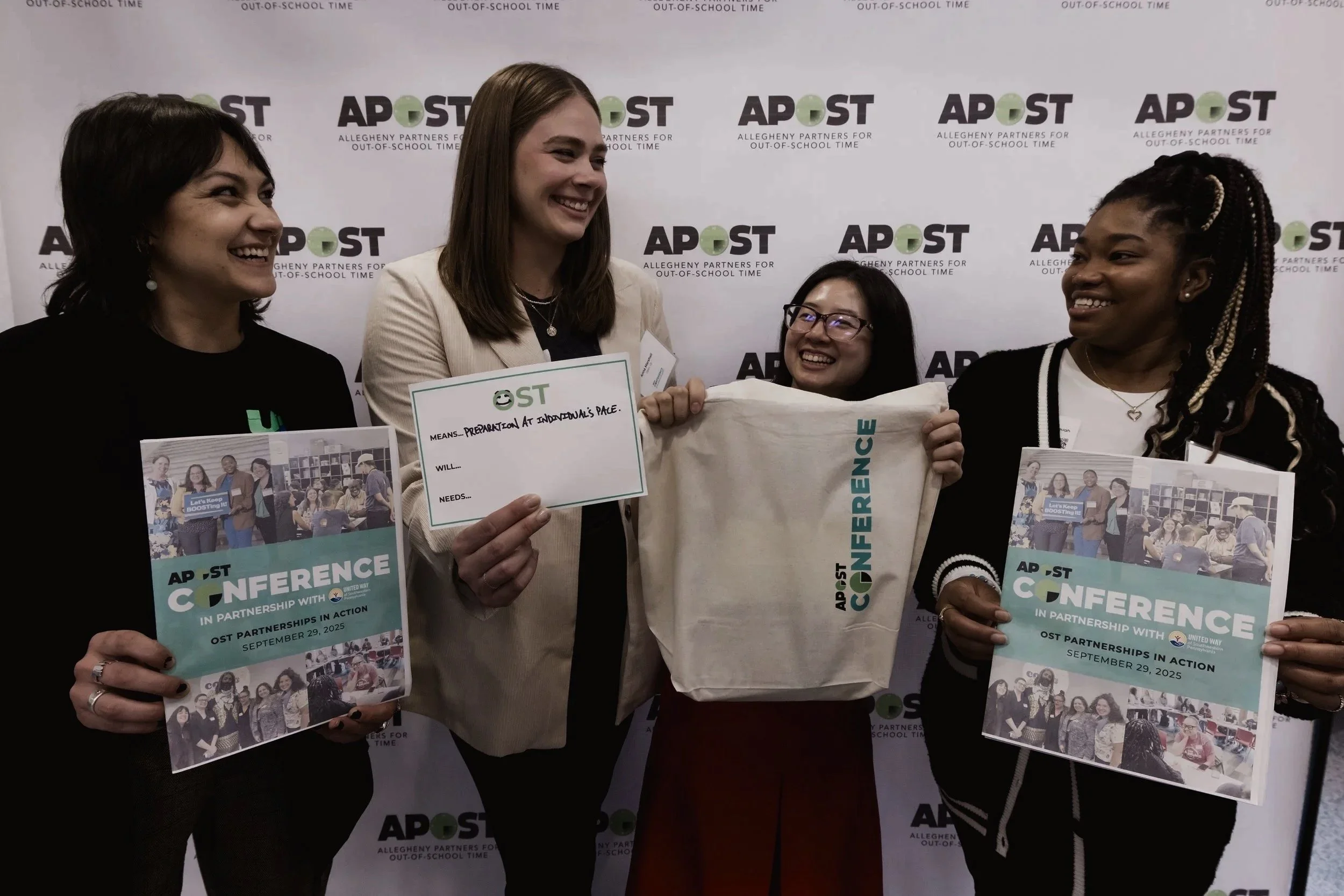
System‑Level Investments in APOST and Eval Lab
(2021–2026)
The Investment
McElhattan Foundation’s vision that every child in Allegheny County has access to high-quality out-of-school-time (OST) learning rests on a clear understanding: strong OST ecosystems do not emerge by accident. Instead, they are intentionally built, carefully coordinated, and sustained over time. Achieving this vision requires more than funding individual programs. It requires strategically investing in the infrastructure that allows programs, and the people who lead them, to succeed—and intermediaries are a key component of that system infrastructure.
This understanding took shape in 2021, when the Foundation undertook a review of national OST research, including the foundational 2012 report Making the Connections: A Report on the First National Survey of Out-of-School Time Intermediary Organizations. The research showed consistent findings across communities of all sizes—where OST ecosystems were strong, a capable intermediary organization was typically at the center, connecting providers, aligning quality standards, coordinating funding, supporting professional learning, and reducing fragmentation across the field.
In Allegheny County, that role of a capable intermediary is fulfilled by Allegheny Partners for Out-of-School Time (APOST), a longtime grantee of McElhattan Foundation.
McElhattan Foundation has made sustained investments to strengthen the county’s OST ecosystem by way of funding APOST, recognizing that system‑level change requires long‑term commitment. A first grant in 2021 supported APOST’s transition to an independent organization and the build‑out of core infrastructure, followed by a second grant in 2024 that expanded and its role in professional development, quality improvement, and advocacy. The success of these two multi‑year investments laid the foundation for a third grant to the University of Pittsburgh School of Education in 2025 for Eval Lab, a project that builds youth‑centered evaluation capacity across OST providers and embeds learning into everyday practice.
Early support for APOST, alongside the co-creation of Eval Lab with the University of Pittsburgh School of Education, helped lay the groundwork for a regional infrastructure that now supports more than 250 OST providers. Eval Lab aims to equip OST providers with youth-centered evaluation tools that embed learning and reflection into everyday practice, allowing organizations to understand what works in their unique OST contexts. Together, these investments, as illustrated in Table 1, have expanded access to professional development, quality improvement systems, and evaluation tools—significantly increasing the field’s collective capacity to deliver meaningful learning experiences for youth.
| Grantee | Grant Cycle | Grant Duration | Grant Amount |
|---|---|---|---|
| Allegheny Partners for Out-of-School Time (APOST) | Fall 2021 | Two years | $250,000 |
| Allegheny Partners for Out-of-School Time (APOST) | Fall 2024 | Two years | $290,000 |
| University of Pittsburgh School of Education (Eval Lab) | Spring 2025 | One year | $160,000 |
Table 1: Summary of Grants to APOST and the University of Pittsburgh School of Education (Eval Lab)
The Impact: Building an OST Ecosystem in Allegheny County
Highlights:
250+ OST providers supported annually across Allegheny County through training, quality improvement systems, evaluation tools, and coordination
$11.5 million secured for Pennsylvania’s first-ever OST state budget line (BOOST) in 2024 with ~$2 million in new funding directed to Allegheny County OST providers
100+ practitioners trained annually in Weikart Positive Youth Development and 110+ practitioners trained annually in Social-Emotional Learning (SEL)
28 OST organizations fully engaged in cohort-based quality improvement through APOST's Quality Campaign, earning or renewing their partner status for three years
APOST functions as the central connective tissue in Allegheny County’s OST ecosystem. Unlike direct service organizations, it does not operate programs of its own. Instead, it focuses on strengthening the conditions that allow all providers to thrive. Serving as a bridge between funders and practitioners, and as a coordinating hub across the OST landscape, APOST works in three core areas: professional development, organizational quality improvement, and advocacy at the local, regional, state, and federal levels.
APOST’s integrated approach supports OST organizations in Allegheny County using evidence-backed quality improvement systems, including those developed by the Weikart Center for Program Quality. This national initiative of the Forum for Youth Investment helps OST programs improve quality through research‑based tools and training. Furthermore, its signature Youth Program Quality Improvement (YPQI) approach provides a practical framework for creating safe and engaging learning environments and supports continuous improvement across diverse youth programs.
At the center of APOST’s effectiveness is a strong team with expertise in both practice and policy. Executive Director Karen Dreyer brings deep experience from frontline OST programming and years of statewide advocacy. Alongside Karen, Partnerships Manager Kelly Rottmund leads quality improvement and professional development efforts, drawing on extensive direct youth work experience. Together, they have built a responsive and aligned team that remains closely connected to the realities providers face, positioning APOST as a leader and go-to support for the OST ecosystem in Allegheny County.
Transitioning to Independence
In 2021, after more than a decade housed within the United Way of Southwestern Pennsylvania, APOST made the strategic decision to become an independent 501(c)(3) to allow the organization to better serve the growing field. To support this transition, the Foundation awarded a two‑year, $250,000 operating grant. This investment helped cover essential start‑up costs for the new nonprofit and gave Karen as its new Executive Director sufficient runway to build infrastructure and begin offering critical services to OST providers right away. The grant proved even more timely than originally anticipated, as the COVID‑19 pandemic catalyzed increased need for OST programs and laid bare significant service gaps throughout the county. With the further help of an advisory committee and external consulting partners, APOST was able to launch from a position of operational and financial strength.
The decision to transition to a standalone organization have proved significant for the field. Since becoming independent, APOST has served hundreds of OST providers, offered high-quality workforce trainings and led the way in regional efforts to expand public funding for OST in Allegheny County.
Advocacy that Unlocks Public Investment
APOST’s advocacy work has been particularly impactful. APOST played a central role in helping secure Pennsylvania’s first dedicated OST state budget line in 2024: the $11.5 million Building Opportunity through Out-of-School Time (BOOST) program. Through this effort, 10 organizations in Allegheny County were recommended for more than $1.8 million in funding, with additional resources flowing through statewide allocations to organizations such as Boys & Girls Clubs and YMCAs. In total, nearly $2 million in new funding has entered the county’s OST ecosystem—resources that did not exist before.
Importantly, this was not a one‑time gain, and the establishment of a dedicated OST funding stream has created a platform for continued investment. In FY 2025–26, the PA Commission on Crime and Delinquency (PCCD) combined the BOOST funding application with the Violence Intervention and Prevention (VIP) application. APOST contracted with grant writers to support 10 organizations to apply for VIP + BOOST funding, and six of these organizations were awarded funding, bringing almost $2 million of state funding to Allegheny County. Together, these investments reflect sustained momentum and affirm the Commonwealth’s growing recognition of structured OST as a core strategy for youth development especially when it comes to violence prevention.
Training OST Practitioners
Professional learning remains a cornerstone of APOST’s work. Each year, more than 100 practitioners participate in Weikart Positive Youth Development trainings, with an additional 110 engaged in specialized Social-Emotional Learning (SEL) trainings. These professional development offerings are delivered through APOST’s Weikart Youth Work Methods and SEL Methods Workshops and are research‑backed, two- to three- hour interactive trainings designed for adult learners working in OST settings. Modeled on the Weikart Center’s pyramid of program quality, the workshops equip frontline staff with practical, immediately applicable skills to build safe, supportive, interactive, and engaging learning environments. Trainings are led by local professionals with OST experience who are trained by the Weikart Center, ensuring content is grounded in both national research and local practice. In January of 2026, APOST brought the Weikart Center to Allegheny County and an additional 18 local professionals were trained to lead Weikart Youth Work Methods workshops.
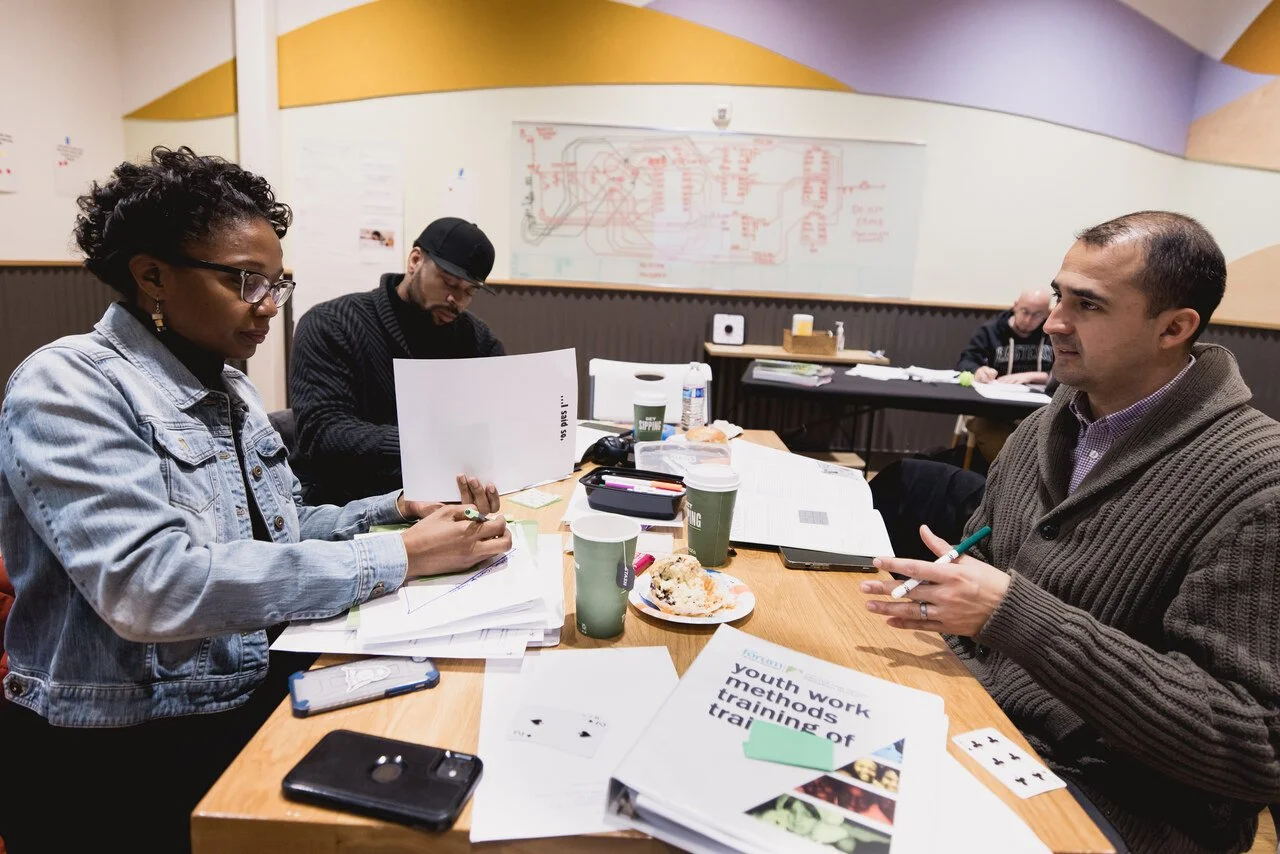
Moreover, recognizing the importance of leadership at all levels, APOST also launched the OST Managers Cohort in 2024 to support mid-level leaders. Seventeen participants completed the inaugural cohort, reporting measurable professional growth and deepened peer connections. At conclusion of the OST Managers Cohort, one participant shared:
“This cohort deepened my passion for doing the work I do. This is my first time working in a full-time non-profit role, and all I knew going into an industry like this is that I had a passion for it. This cohort deepened my understanding of how this type of work operates and made me more efficient in my general professional growth. I am very grateful for APOST!”
Another reflected:
“I do want to say though, this was a really incredible thing to be a part of. I really looked forward to coming each month, and I learned so much—both about OST nonprofits, other resources in the community, and about myself. I owe a lot of that learning to you. So thank you, so much!”
These experiences speak to something larger than any single training. They reflect APOST’s role in building a professional community—one where practitioners learn from one another, grow into leadership, and stay committed to the field.
The impact of APOST’s support is further illustrated through providers such as Melting Pot Ministries, a small community‑based organization in the South Hills. Diane Ford, the Executive Director and CEO, came to OST with a background in law and consulting, not youth development. She turned to APOST for their Weikart Positive Youth Development training. Over time, she not only improved her own programming, but became a trainer herself and her experience further reflects APOST’s role as a capacity-builder that allows small programs to become high‑quality contributors in the broader OST ecosystem. As Diane shares:
“APOST has been a transformative force in my journey as a leader…Their training strengthened Melting Pot Ministries’ approach to positive youth development and empowered me to become a Weikart trainer, allowing me to support other providers across the region. Because of APOST, small grassroots organizations like ours can deliver high‑quality, trauma‑informed programming to the youth we serve. Their partnership has helped us grow, sustain our work, and stay true to our mission of Lifting, Opening, Valuing, and Empowering families in the South Hills.”
Ensuring Research-backed OST Ecosystem Quality
The 2024 relaunch of APOST’s Quality Campaign, a cohort‑based continuous quality improvement initiative using the previously mentioned Weikart Center’s Youth Program Quality Improvement framework, offers another lens into its impact. In the pilot year, 16 organizations fully participated, attending workshops, setting clear improvement goals, and renewing or achieving Quality Campaign Partner status for three years. In total, 28 OST organizations have participated in this initiative to date. This high-touch model proved particularly effective in fostering engagement and deepening relationships across the field, strengthening both individual programs and the system as a whole.
Statewide survey data further highlight APOST’s unique role. When OST practitioners across Pennsylvania were asked where they turn for OST policy, advocacy and funding information, nearly 30% identified APOST—even though respondents were sourced from across the state. A similar proportion of respondents came from Allegheny County, pointing to a strong concentration of engagement within APOST’s geographic footprint. Outside the region, responses were dispersed across nearly 30 different sources, highlighting the fragmentation that persists in areas without a strong intermediary organization like APOST.
Alongside these ecosystem‑building efforts, APOST partnered with the Afterschool Alliance to localize findings for Allegheny County in 2025’s America After 3PM survey. America After 3PM is a national household survey commissioned by the Afterschool Alliance and conducted by Edge Research that examines how children and families experience the critical hours between 3:00 and 6:00 p.m., the time between the end of school and the end of the workday for many parents. Drawing on responses from more than 30,500 households nationwide—including 456 households and 682 children in Allegheny County—the data underscored both strong demand for afterschool programming and persistent gaps in access. In Allegheny County alone, 118,940 parents want afterschool programs for their children, yet only 26,489 students are currently enrolled, leaving more than 92,000 children without access.
Parents overwhelmingly support public investment. Ninety-two percent of national respondents shared that they favor public funding across political affiliations, and nine in 10 said that afterschool programs support learning, reduce screen time, and build social skills. Still, access remains uneven: more than half of elementary students and nearly half of middle school students not currently enrolled would participate if programs were available. Cost, transportation, inconvenient locations, and limited availability, along with an average reported weekly cost of $101.50, continue to be major barriers, highlighting the urgent need to expand affordable, high‑quality afterschool options across the county.
The Eval Lab Partnership
In parallel with its investment in APOST, the McElhattan Foundation has supported Eval Lab (see Table 1) since 2025, a complementary initiative developed with the University of Pittsburgh School of Education and led by Dr. Tom Akiva. Eval Lab works with individuals and organizations to build stronger evaluation knowledge, tools, and practices by guiding them through hands-on learning and application. Through a cohort-based approach, Eval Lab supports organizations in identifying evaluation questions, collecting data, and using insights to strengthen their programs.
Moreover, Eval Lab responds to a longstanding challenge in the OST field: although research clearly demonstrates the overall value of OST programs, individual providers often lack practical tools to evaluate what is working within their specific contexts. Core outcomes such as creativity, belonging, and youth voice are central to high‑quality programming, yet they are not easily captured through traditional evaluation approaches.
Eval Lab has allowed local providers to build skills in applying cutting-edge evidence-based practices in evaluation to their real-world settings. Participating organizations have piloted approaches that integrate evaluation directly into program practice. For example, Manchester Craftsmen’s Guild created a video “confessional booth” where youth reflect on their experiences, while Open Up used a visual “feeling board” that allows participants to track how they are doing over time. These methods have proven more engaging for young people and more actionable for providers than traditional pre‑ and post‑surveys alone. Together, they point toward a model in which evaluation becomes a natural part of everyday practice rather than a burdensome add‑on, helping the field move toward more meaningful and robust measures of quality and access that matter to both practitioners and funders. The first Eval Lab cohort concluded in March 2026, with early reflections underscoring its value.
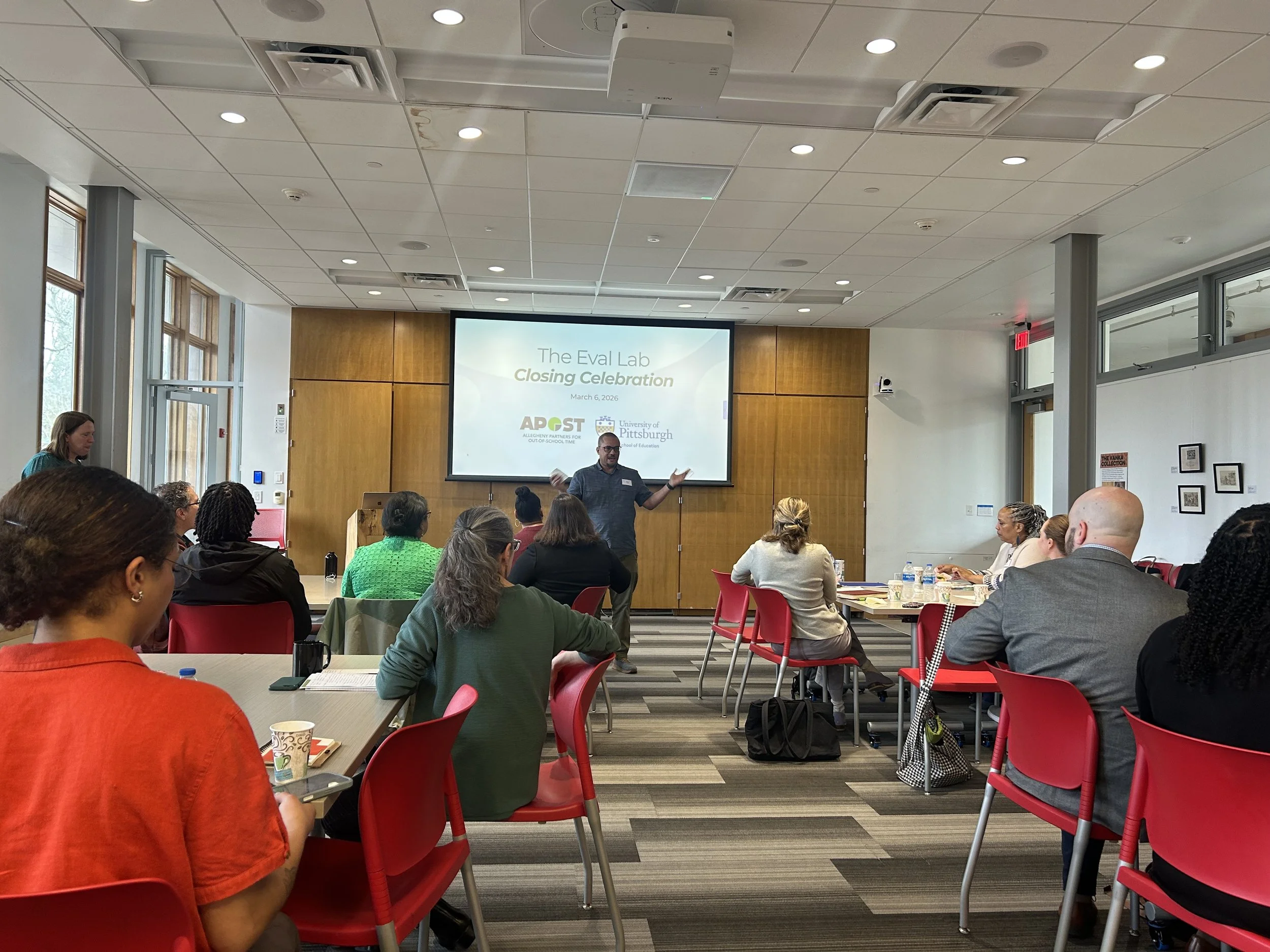
As Karen Dreyer noted:
“This grant has allowed us to strengthen individuals’ and organizations’ evaluation knowledge, tools, and practices. Six out-of-school time organizations in Allegheny County participated in our pilot cohort—Bible Center Church, Manchester Craftsmen’s Guild Youth, Neighborhood Learning Alliance, Open Up, Pittsburgh Parks Conservancy, and Women and Girls Foundation. They have spent the last six months identifying an area of their programs to evaluate, gathering qualitative and quantitative information, and beginning to analyze that information to strengthen their programs.”
While formal outcomes are still emerging, early indications suggest that participants are gaining clarity and beginning to integrate evaluation into their daily practice. APOST supports this work by recruiting participants and helping with implementation, while the University leads instructional design and research. The Eval Lab OST Program Evaluation Toolkit is expected to be released by July 2026, extending these learnings to the wider field.
A System-Level Strategy for Lasting Change
Through sustained, strategic investment, McElhattan Foundation has played a catalytic role in shaping Allegheny County’s out‑of‑school‑time landscape. By focusing on infrastructure rather than just funding isolated programs, the Foundation helped strengthen APOST as a capable intermediary with capacity to support across the field. These investments directly contributed to new public funding, increased provider capacity, and a more connected professional community.
At the same time, the Foundation’s support for Eval Lab reflects a commitment to learning and evidence, ensuring that growth in access is matched by growth in quality. Together, these efforts have moved the OST landscape toward a more sustainable, equitable system—advancing the Foundation’s vision that every child in Allegheny County has access to high‑quality out‑of‑school‑time learning.
Insights for Funders
On the funder side, this work highlighted the importance of pacing and patience for large, ecosystem-building initiatives. When APOST relaunched as an independent 501(c)(3), there was an initial expectation that activities would move “full speed ahead” as soon as an executive director was in place. In practice, Karen Dreyer and her team spent a substantial amount of time carefully developing internal systems and staffing capacity, as well as strategic planning and communications. Although this methodical approach sometimes felt out of sync with funder timelines, the result was a fully developed plan and a highly professional public presence, with no major course corrections needed at launch.
The experience also clarified how the funder role can evolve from close oversight to trust. Early on, Foundation staff served on APOST’s advisory committee and board to help guide the restart. Over time, as APOST consistently demonstrated alignment with field needs and strong execution, those governance roles became less necessary. There is now high confidence that APOST can chart its own course without constant funder involvement.
There were also important learnings related to capacity and infrastructure grants. The Foundation awarded APOST funding in fall 2024 to implement a customer relationship management (CRM) system to better track participation, outcomes, and organizational growth. While the value of the CRM was clear, implementation was delayed due to limited staff bandwidth amid other pressing priorities. Throughout this period, Karen communicated regularly about the delay and took steps to address the underlying capacity issue by strengthening internal project management and hiring an external consultant in early 2026. A CRM platform has now been selected and is expected to be implemented later this year. This experience prompted reflection on how infrastructure grants are structured: new systems may require dedicated implementation capacity, such as staff time or consultant support, to be successful, or may need to be sequenced until an organization is ready to absorb them. More broadly, it surfaced the risk of overloading an emerging organization with too many simultaneous priorities, even when each initiative is individually well‑conceived.
Relatedly, the investments also highlighted the importance strong, independent organizations to support the field. At least one funder involved in the early advisory structures pushed for APOST to move in a direction that did not match what local OST providers were asking for. Karen declined that direction and held to what she was hearing from the field. In hindsight, that decision is seen as strengthening both APOST’s strategy and the overall OST agenda, demonstrating the importance of trusting strong leaders to say “no” when funder ideas don’t align with practitioner experience. While this kind of stance is difficult for nonprofit leaders in practice, Karen was able to do so for two key reasons: she had systematically gathered data and input from providers through listening sessions, surveys, and ongoing engagement, and she worked closely with APOST’s board early in her tenure to establish a clear “north star” that defined the organization’s scope and purpose. Together, these foundations gave her both the evidence and the governance backing needed to maintain alignment with the field.
